


This is one of a growing collection of AI-enhanced processes I’ve designed to support different types of thinking in the classroom. You can find the full collection at aienhancedprocesses.com/t/processes. I’ll keep adding to it as I build more. The content below is a preview; the full collection of processes will be available in my book.
At a Glance
Feedback is only useful if you actually do something with it. That sounds obvious, but most students either avoid seeking it, collect it without making sense of it, or act on it without stopping to think about whether it moved them forward. Feedback requires trust. You have to believe the person or tool giving it has your growth in mind, and you have to be willing to be seen mid-process, before the work is polished. Acquire, Analyze, Act is designed to build both of those things: the habit of seeking feedback deliberately and the relational conditions that make honest critique possible. The process creates a repeatable loop; seek feedback, pause to construct meaning from what you find, then implement and reflect before starting again. AI can enter at any stage or none at all. Where it fits depends entirely on where students’ thinking needs a thought partner.
The Acquire, Analyze, Act process (below) is a flexible process when engaging in feedback, as it can incorporate AI at any stage; making it a different approach than the other processes shared up until this point.
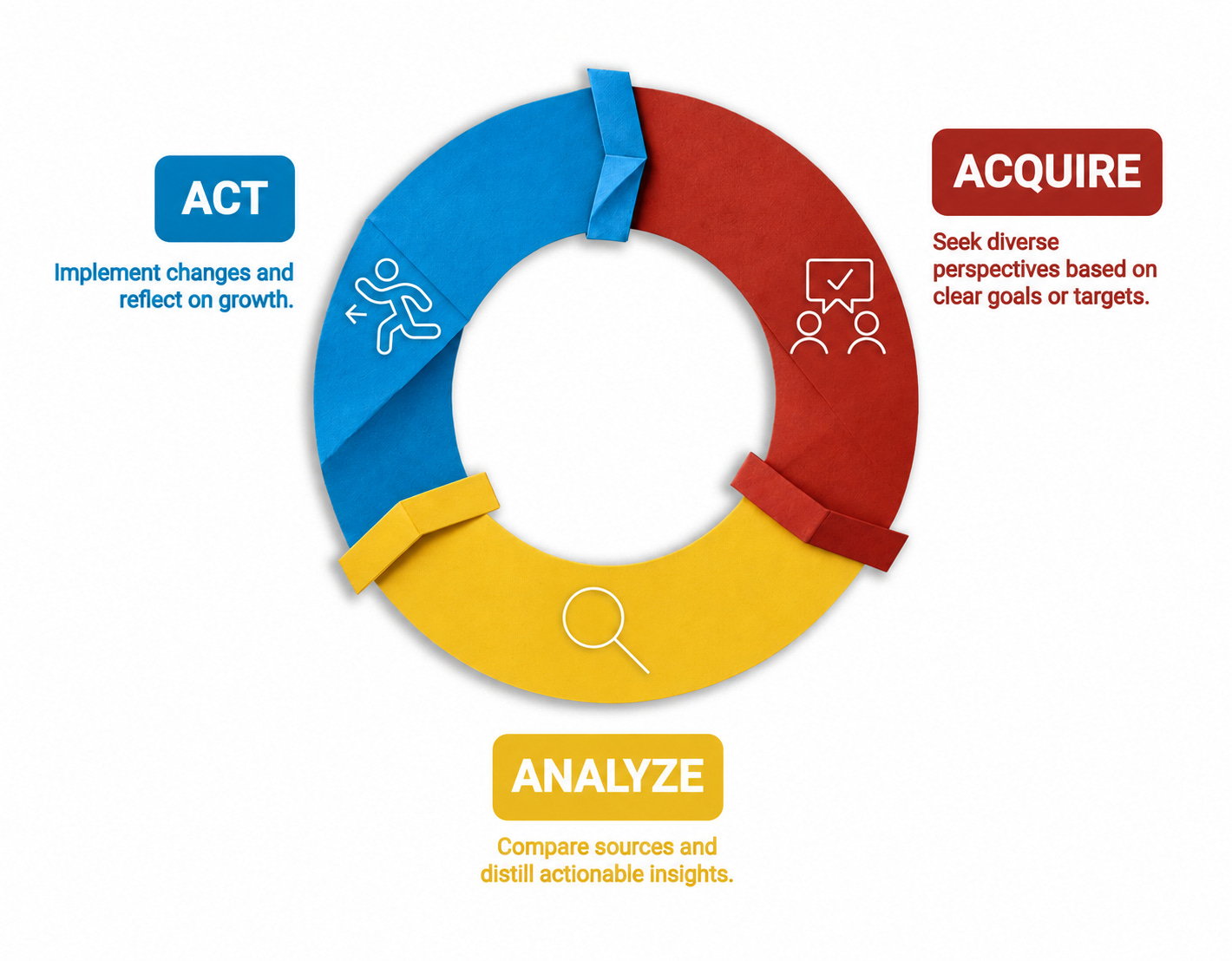
Acquire

With a feedback-seeking mentality, consider what you want to learn.
Set clear goals: Decide about what you want to learn, and define success using criteria that matter to you.
Develop feedback-seeking behavior: Expect revision, regulate emotions, and build trusting environments where critique is welcome.
Seek diverse perspectives: Collect timely feedback from multiple sources (AI, peers, teachers, self).
Time it strategically: Seek input early and often, when you can still implement meaningful changes.
How might AI be used in this step of the process? Create a bot in which the learning objectives are entered by the student or teacher. The students share their work and discuss the desired outcome.
Analyze

Intentionally pause and construct knowledge by examining the data
Interpret: Look for patterns, agreements, and contradictions across feedback.
Unpack: Pursue “why?” and “show me?” until the data is crystal-clear.
Identify takeaways: Select the most impactful actionable insights.
How might AI be used in this step? Upload a summary of feedback, annotated work, etc., and ask for a summary of and actionable next steps to a large language model like Chat GPT. Have a conversation with the bot about what the next steps might be.
Act

Take time to implement your takeaways
Iterate promptly: Apply insights while they’re fresh and check revisions against original objectives.
Repeat as necessary: Return to seeking feedback and continue the cycle until your goals are achieved.
Reflect: Consider how the feedback process helped your thinking and encouraged growth. What would be helpful to seek feedback on during the next cycle?
How could AI be used in this step? Students might use AI to vibe code (when we code with the support of AI) and ask it to support our vision based on the feedback we received. There are many possibilities!