


This is one of a growing collection of AI-enhanced processes I’ve designed to support different types of thinking in the classroom. You can find the full collection at aienhancedprocesses.com/t/processes. I’ll keep adding to it as I build more. The content below is a preview; the full collection of processes will be available in my book.
At a Glance
Hindsight, Oversight, Foresight treats metacognition as a practice distributed across the entire learning experience. Students can start practicing metacognition at any point, revisit steps, and cycle through them as the work demands.
Hindsight looks back to understand what happened and why.
Oversight pauses mid-process to notice when thinking is stuck, drifting, or needs a new direction.
Foresight scans what’s ahead before diving in.
AI can support any stage or none; where it fits depends on where a thought partner would help without taking the thinking away from the learners.
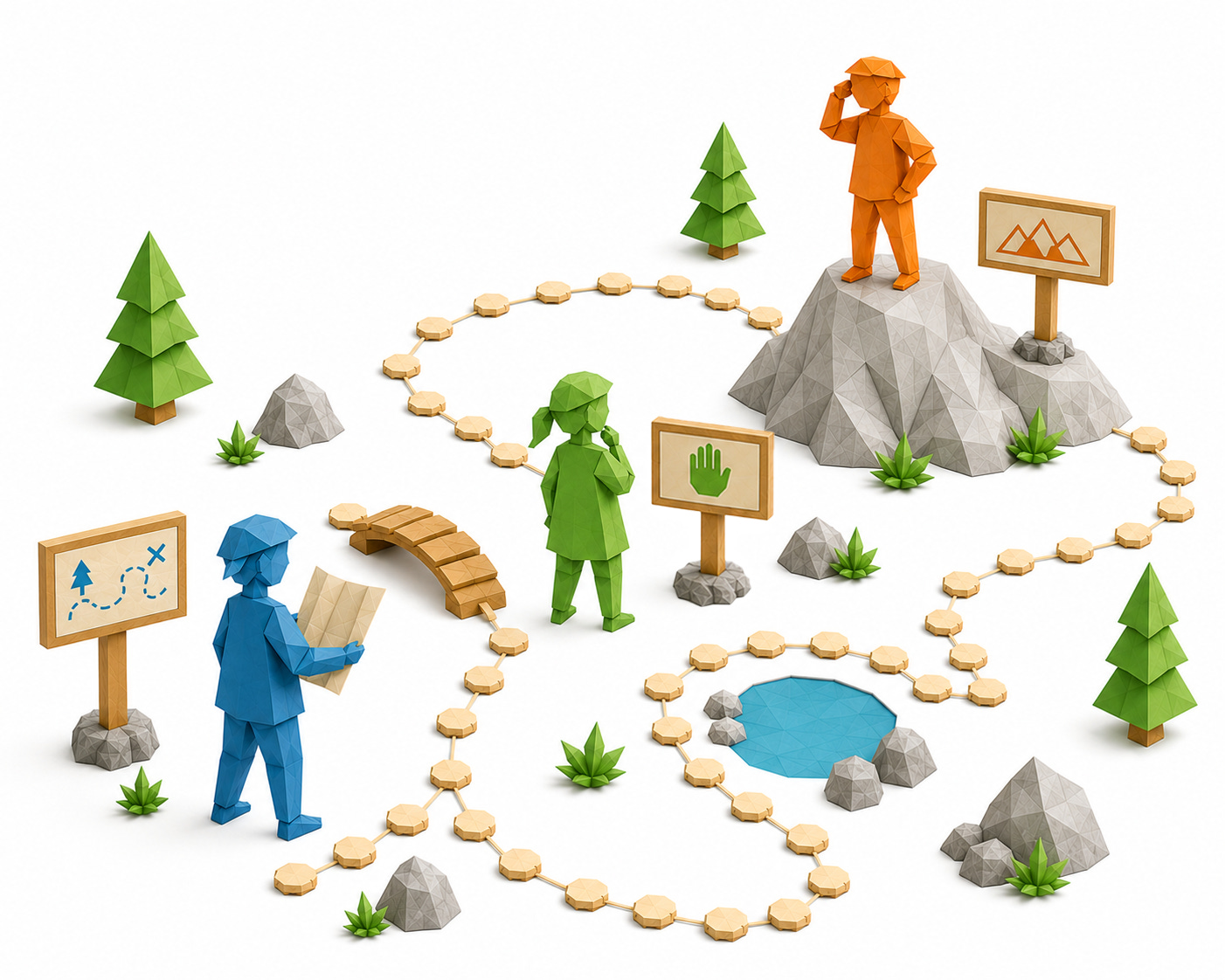
Foresight: Planning for Success
Before learning begins, students who pause to anticipate challenges, activate prior knowledge, and identify useful strategies are more likely to start with intention. They’re also less likely to stress out when things get hard. That pause is metacognition, and it turns out, doing it before you need is a powerful practice.
Below are the three steps in this process.
Find. Students scan the task, prompt, or situation and identify key elements like requirements, keywords, constraints, or prior connections. AI could be used to ask students about the task, helping them to break down assignments into the above parts.
Focus. Students surface questions, possibilities, or uncertainties about the elements in Find. AI could be used to support their curiosity and reveal what thinking or clarifications may be needed before action.
Act. Students choose a direction, where to start, what strategies to try, or what support resources to use. AI could be used in this step to support thinking through questions and paraphrasing; again, students should make all decisions and AI supports their thinking to do so.
Oversight: In The Moment Awareness
Oversight is that internal version of formative assessment. It is noticing when we are stuck, distracted, guessing, or meeting our goals, and identifying what we might need next. It creates the pause to ask whether our current approach is working and whether a shift in strategy, pace, or resources could help.
Below are the three steps in this process:
Observe. Students pause during a task to scan their thinking and emotional state. They identify signs of confusion, distraction, guessing, confidence, or progress. AI could be used to ask students to check in, notice, and draw their attention to what is happening internally and externally.
Organize. Students make sense of what they noticed by sorting, interpreting, or connecting their observations. AI can help them clarify patterns, name what might be happening, or rephrase their thinking without solving the problem.
Act. Students choose the next step and what to adjust. AI could help them weigh options, break down steps, and so on; however, decisions ultimately stay with the students.
Hindsight: Reflecting on Events
After learning, we look back to understand what happened. Hindsight helps us notice what worked, what didn’t, and what to change next time. It’s also when we connect outcomes to the choices or strategies that caused them, so learning can transfer.
Below are the three steps in this process.
Highlight. Students identify what stood out, including what worked, what was difficult, where things went off track, and surprises they encountered. AI could be used by asking kids about the event and drawing out their thoughts.
Hypothesize. Students think about why events happened. They consider causes, choices, misunderstandings, strategies, or conditions that contributed to the outcomes of the experience. AI could support by asking questions to see cause and effect relationships.
Act. Students capture what they want to take away from this experience. It could be an insight, a strategy note, a checklist, or a reminder on how to work with a team member, etc. AI could help summarize, label takeaways, or suggest transferability. It could also prompt learners to consider their new learning and how it could be applied in the future.