



A familiar problem in schools today: a student turns in a polished essay, and you suspect AI wrote it. Now you are left wondering how to teach writing when the thinking happens somewhere you can’t see. Learning nerd Stephen Taylor calls that problem “the invisible middle.” Students go away, come back with a product, and turn it in. Who’s to say that they did or didn’t write it?
And the thing is that the longer the task, the more blind spots there are. My other processes, like Think, Generate, Edit, are short routines that often happen inside a larger task such as giving feedback. However, research papers, essays, and projects are different. They run for weeks, they need more steps, and often the teacher or student has to design the process from scratch. This post is about building your own multi-step process, meaning anything longer than three steps, without losing sight of the thinking in the middle.
Let’s take a look at what makes a multi-step process, examples, and resources you can use in your class.
3 Moves to Make A Multi-Step Process
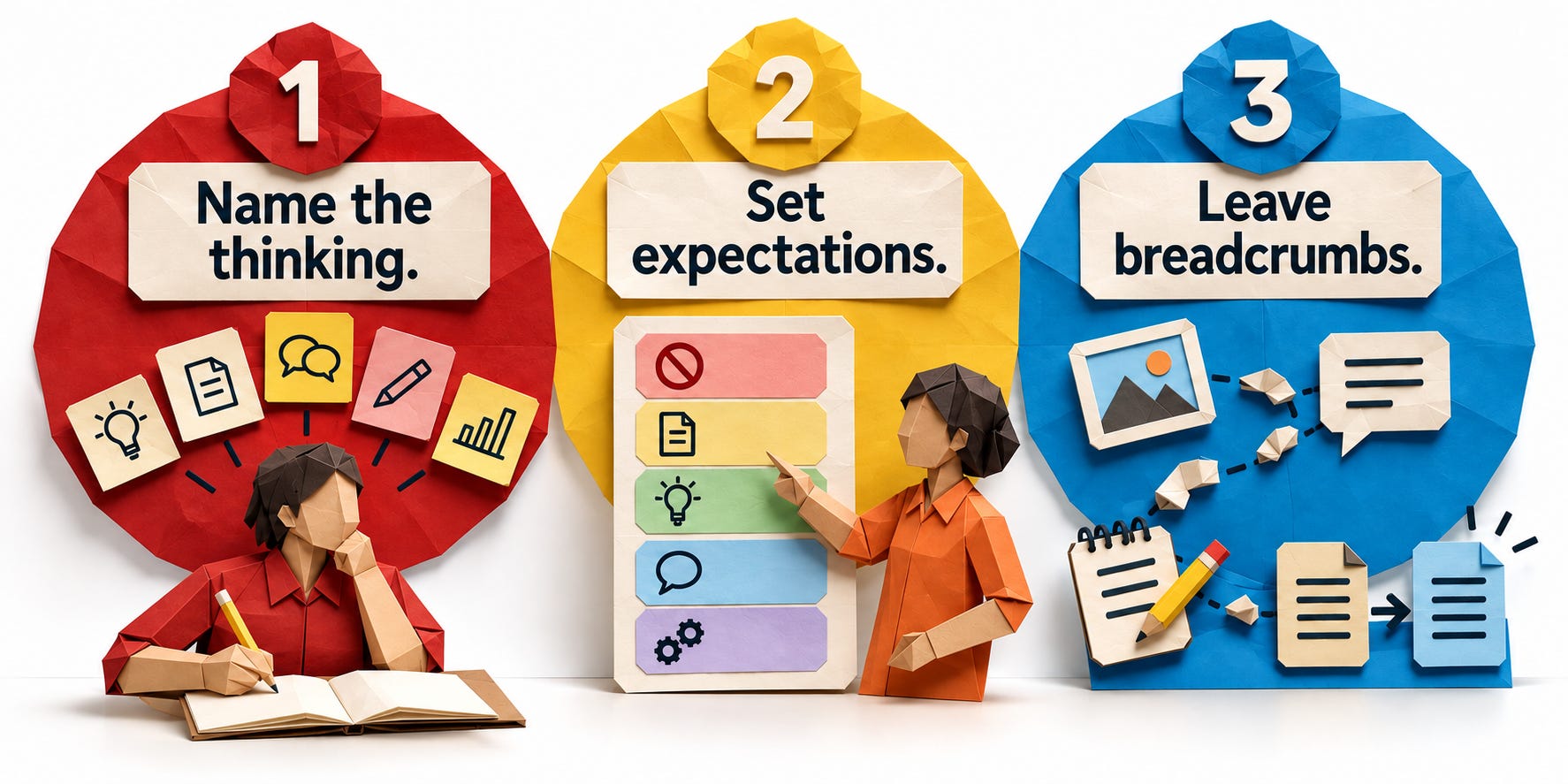
My work is is based on three quite simple actions that teachers or independent students can take. I have everything explained in more detail both in my book and in this article: How to Design AI-Enhanced Processes. So in the case of writing or other long-form projects, I want to recommend that you follow the same moves as my shorter processes like Think, Generate, Edit; you just apply those moves more times in a longer project. For simplicity, I will frame the rest of this post around writing.
Move 1: Name the thinking.
Break the writing task into its actual steps and give each one a verb. Not “work on your essay” but Brainstorm, Draft, Acquire feedback, Revise, Reflect, Justify, Explain, Share, Defend. The thinking verb impacts everything else because it answers questions like “what do you want me to do?”
Second, as a teacher, or for more independent learners, you cannot plan for AI use in a step that is vague. “Can I use AI while I brainstorm?” has an answer, while “Can I use AI on this?” is much harder to respond to because it requires interpretation; the word “yes” has a lot of wiggle room.